
The modern office is no longer just a place to work—it is a space that shapes how people think, collaborate, and perform. As businesses evolve, so do their expectations from interior design. Today’s commercial spaces demand a careful balance of productivity, aesthetics, and functionality, where every design element contributes to efficiency while reflecting a professional identity.
Office interiors are now being designed with intention. From layout planning to material selection, every detail plays a role in creating an environment that supports focus, reduces distractions, and enhances the overall work experience.
Designing for Productivity and Flow
A productive office begins with a well-thought-out layout. Open spaces are no longer enough; instead, workplaces are being divided into purposeful zones that support different types of work—focused tasks, meetings, and informal collaboration.
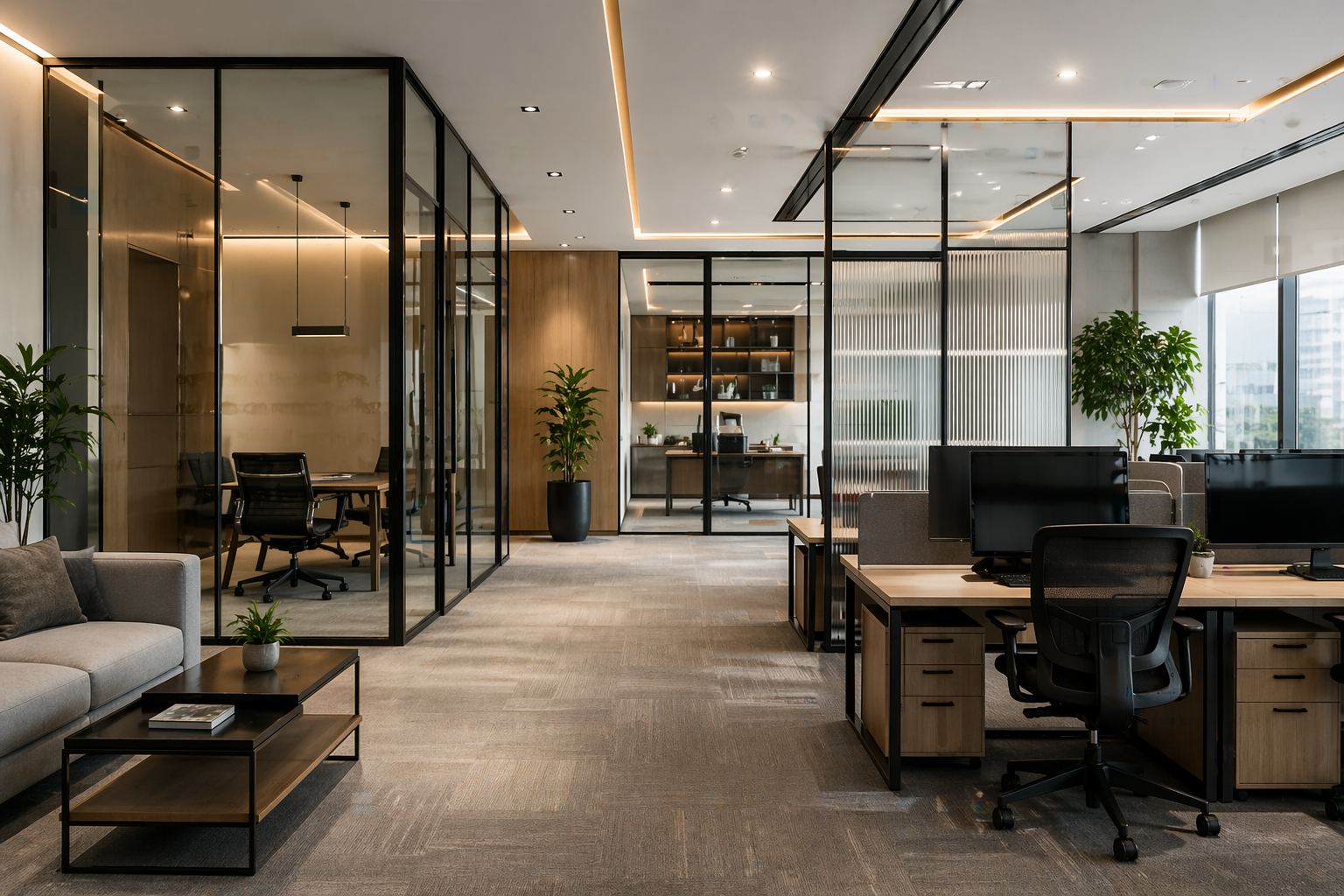
Glass-based designs have become central to this approach. They allow natural light to flow freely while maintaining defined spaces. This creates an environment that feels open yet organized, helping employees stay engaged without feeling confined.
Sound control is another essential factor. In busy offices, noise can quickly become a barrier to productivity. Integrating soundproof glass enclosures ensures that meetings and focused work can happen without interruptions, creating a more efficient and comfortable workspace.
The Role of Modern Materials in Office Interiors
Material selection is at the heart of modern office design. It defines not just the look of a space, but also its durability and usability.
Glass partitions and enclosures offer transparency and sophistication, making offices appear larger and more connected. Options like toughened, fluted, and tinted glass provide flexibility in balancing openness with privacy, depending on the function of the space.
Sleek aluminum profiles and MS-framed glass partitions add structural strength while maintaining a minimal and clean aesthetic. These elements are widely used in contemporary offices for their durability and refined appearance.
To enhance the overall finish, polished and brushed stainless steel accents introduce a subtle touch of luxury, while ACP and HPL panels provide long-lasting surfaces that are both stylish and easy to maintain. Together, these materials create interiors that are not only visually appealing but also built to withstand daily use.
Creating Functional and Flexible Workspaces
Modern offices require flexibility. Spaces must adapt to different needs without losing their structure or identity.
Minimalist sliding glass doors are an effective solution, allowing areas to be opened or closed as required. They help optimize space while maintaining a seamless flow between different zones.
Beyond traditional workstations, there is also a growing demand for personalized spaces within offices. Executive home office makeovers bring a professional environment into residential settings, ensuring productivity even in remote work scenarios.
Similarly, incorporating custom reading nooks and pooja spaces reflects a more holistic approach to workplace design—one that considers not just work, but also comfort, reflection, and well-being.
Aesthetic Consistency and Brand Identity
An office is often the first physical representation of a business. Its design should communicate clarity, professionalism, and attention to detail.
Modern commercial interiors focus on maintaining a consistent design language. Clean lines, neutral tones, and high-quality materials create a cohesive look that aligns with contemporary business values. Glass, metal, and panel finishes work together to form an environment that feels both modern and timeless.
At the same time, subtle design elements—like textures, finishes, and lighting—add depth without overwhelming the space. The result is an office that is visually appealing while remaining practical and efficient.
The Importance of Expert Execution
Transforming an office space requires more than design ideas—it demands precision in execution. From ensuring structural stability to achieving flawless finishes, every stage of the process must be handled with expertise.
A professional approach ensures that all elements, from glass installations to paneling and metal frameworks, are integrated seamlessly. It also guarantees that the final outcome meets both functional requirements and design expectations.
Conclusion
Office interiors today are defined by their ability to combine productivity with style. Through the thoughtful use of materials like glass, aluminum, and steel, along with smart design solutions such as soundproof enclosures and flexible partitions, modern workspaces are being transformed into efficient and inspiring environments.
Whether it is a large commercial setup or a compact executive workspace, the right interior solutions can significantly enhance how a space is used and experienced. In a competitive business landscape, investing in a well-designed office is no longer optional—it is a strategic decision that shapes performance, perception, and long-term success.